Seven document types. Seven templates.
An invoice is not a statement, and a packing slip is not a receipt. Cribble classifies every document first, then extracts the fields that matter for that type: line items and bank details for invoices, balances for statements, quantities for packing slips.
Get started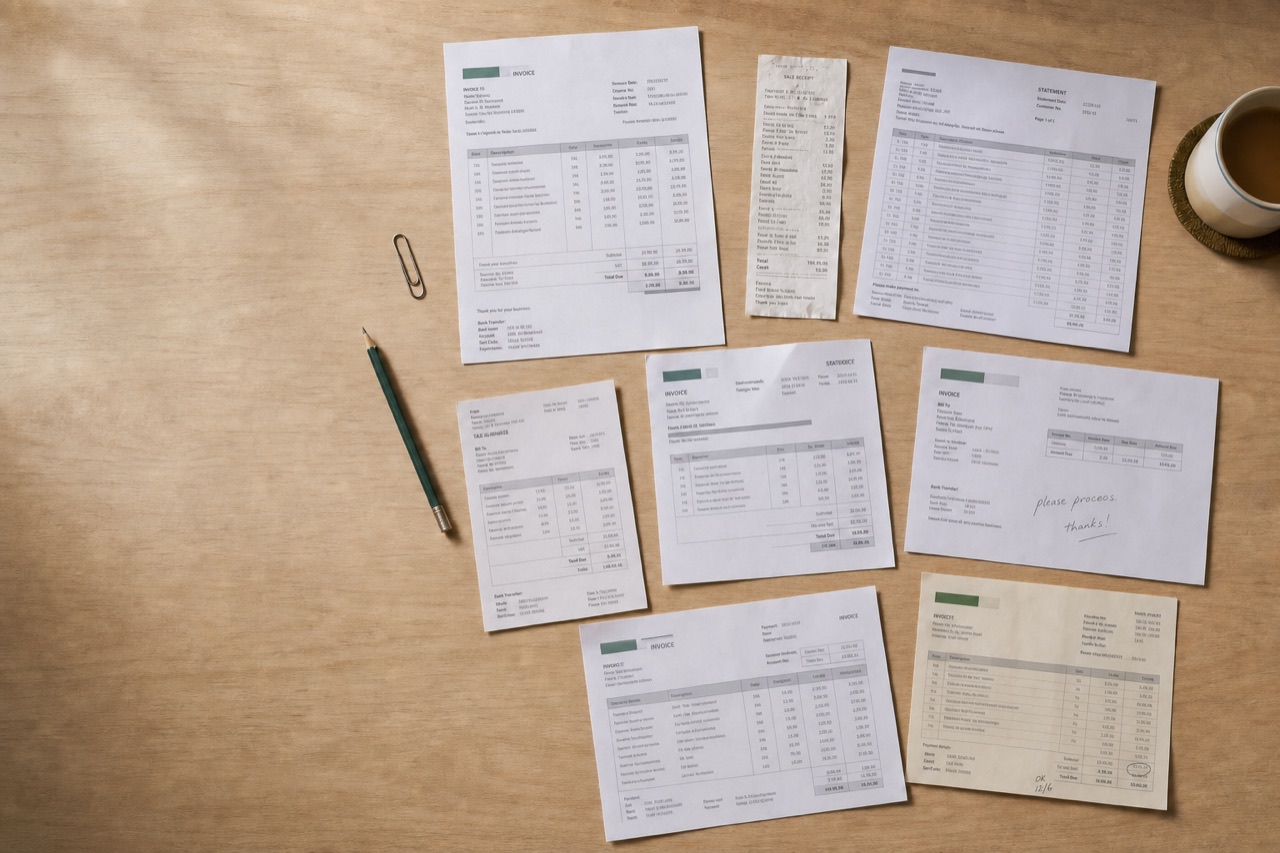
Why type-aware beats one-size-fits-all
Generic Optical Character Recognition (OCR) templates flatten every document into the same handful of fields, which is why they mangle statements and lose line items. Cribble maintains a separate extraction model per document type, focused in on the fields bookkeepers actually enter manually.
The result: opening and closing balances from statements, PO numbers and requested quantities from purchase orders, credited amounts from credit memos; each in its right place, each individually confidence-scored.
And when the standard fields aren't enough, define your own. Business workspaces can add custom fields — a cost center, a project code, a contract number — with a plain-language note on what to look for. Cribble reads them from every new document alongside the built-in fields, confidence scores, inline correction, exports and webhooks included.