

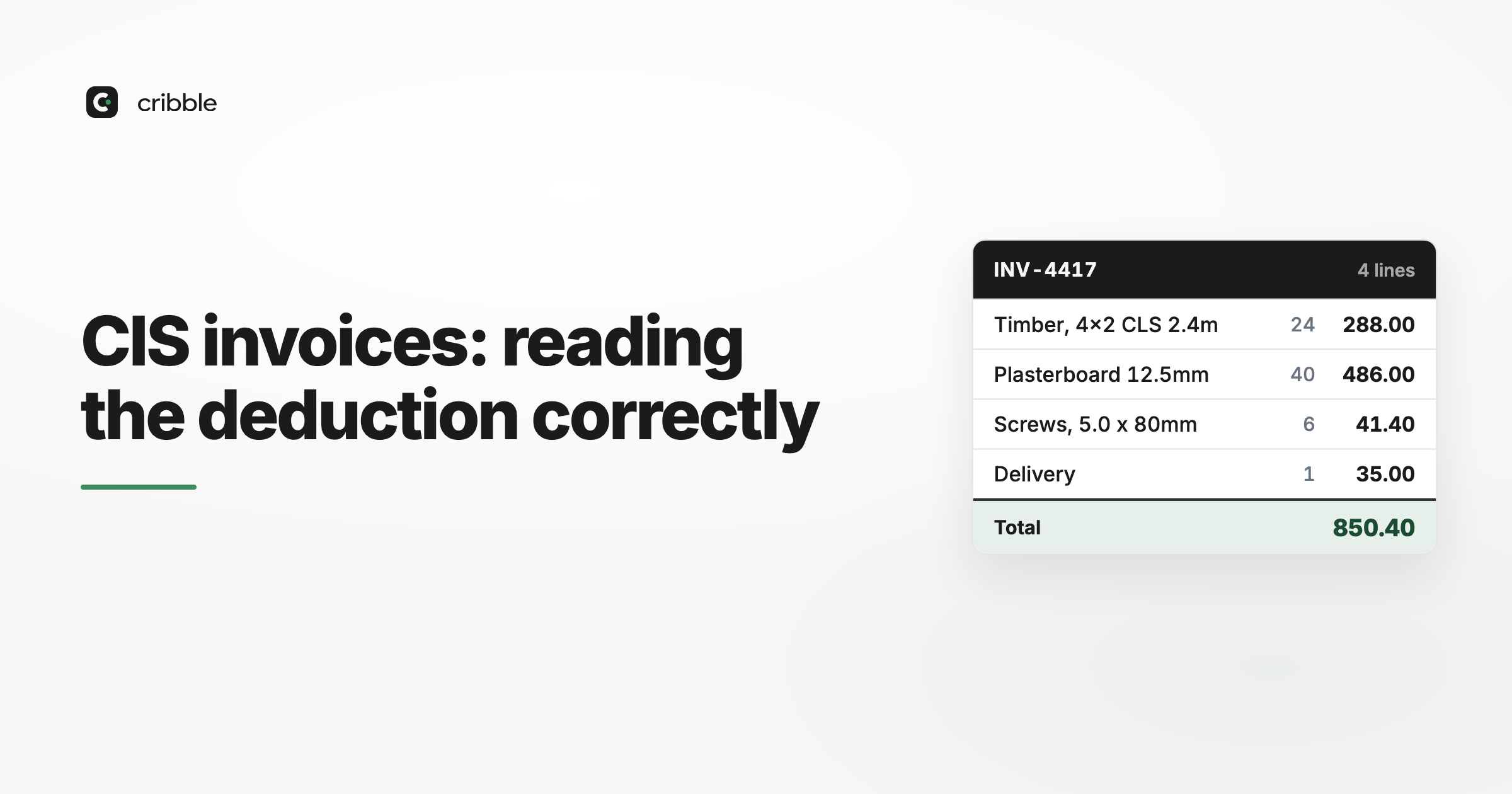
If you are a contractor paying subcontractors in construction, their invoices carry a deduction you make on HMRC's behalf. It looks like a discount on the document and behaves like nothing else in the purchase ledger.
Getting it wrong is expensive in a specific way: the liability for under-deducting sits with you, not with the subcontractor.
What the deduction is
Under the Construction Industry Scheme, a contractor deducts a percentage from payments to subcontractors and pays it to HMRC as an advance against the subcontractor's tax and National Insurance.
The rate depends on the subcontractor's verification status with HMRC:
| Status | Deduction |
|---|---|
| Registered, standard | 20% |
| Not registered | 30% |
| Gross payment status | 0% |
You establish which applies by verifying the subcontractor with HMRC before the first payment. You do not take it from what the invoice says — the invoice is the subcontractor's assertion, and if it is wrong the shortfall is yours to make up.
What the deduction is calculated on
This is the part most commonly misread. The deduction applies to the labour element only, after excluding:
- VAT
- Materials, to the extent genuinely incurred by the subcontractor
- Plant hire from a third party
- Consumable stores, and manufacturing or prefabrication costs
So a subcontractor invoice needs to separate labour from materials, and a document that shows only a single total does not give you enough to calculate correctly. This is a case where reading the line items rather than the header is the whole job, not a refinement.
A worked example, at 20%:
| Line | Amount |
|---|---|
| Labour | £1,200.00 |
| Materials | £480.00 |
| Net total | £1,680.00 |
| VAT at 20% | £336.00 |
| Gross | £2,016.00 |
| CIS deduction (20% of £1,200 labour) | −£240.00 |
| Payable to subcontractor | £1,776.00 |
Points worth noting from that:
- The deduction is £240, not 20% of the £1,680 net (£336) and not 20% of the gross
- VAT is calculated on the full net including materials, and is unaffected by CIS
- The subcontractor is paid £1,776 and receives credit for the £240 you send HMRC
The materials trap
Materials are excluded only where the subcontractor actually bore the cost. Two situations where the exclusion does not apply:
Materials you supplied. If you provided them, they are not the subcontractor's cost and cannot be excluded from their deduction.
Inflated materials. If a materials figure looks disproportionate to the work, HMRC expects you to take reasonable steps to satisfy yourself it is genuine. Accepting an obviously overstated materials split to reduce the deduction is not a neutral act.
Asking for supporting invoices on large materials figures is normal practice and is worth building into the process rather than doing selectively.
The VAT interaction
Since the domestic reverse charge for construction was introduced, many CIS-registered supplies between VAT-registered businesses in the CIS chain are reverse charged. The subcontractor charges no VAT and states that the reverse charge applies; you account for both the output and input VAT.
That gives a single invoice with two different mechanisms on it — a reverse charge for VAT and a CIS deduction for tax — which is why construction invoices are among the more difficult documents in any purchase ledger.
The end user exception matters here: if you are the end user rather than an intermediary in the chain, the reverse charge does not apply and the subcontractor charges VAT normally. That depends on your position, not theirs, and you have to tell them.
What to check on each invoice
- Subcontractor verified, with the deduction rate confirmed by HMRC
- Labour and materials shown separately
- Materials plausible for the work, with support requested where large
- Deduction calculated on labour only, excluding VAT
- VAT treatment correct — reverse charge or standard, per end user status
- UTR and verification reference recorded
Monthly obligations
Beyond the invoice itself: a monthly CIS return by the 19th, monthly payment statements to each subcontractor, and payment of deductions to HMRC. Nil returns are still required in months with no payments.
These are date-driven and unforgiving, which makes the case for entering subcontractor invoices promptly rather than in a month-end session — the return covers what was paid in the tax month, and reconstructing that from a pile in arrears is how deadlines get missed.
This is orientation, not advice. CIS has real complexity around deemed contractors, mixed contracts and status, and the rates and rules change. Check with HMRC or your accountant for your own situation.
Cribble reads line items rather than just the header total, which is what the labour and materials split on a subcontractor invoice requires. Every extracted field carries its own confidence score, so a value it is unsure about is flagged for checking rather than passed through silently. The deduction calculation and the verification remain yours.